
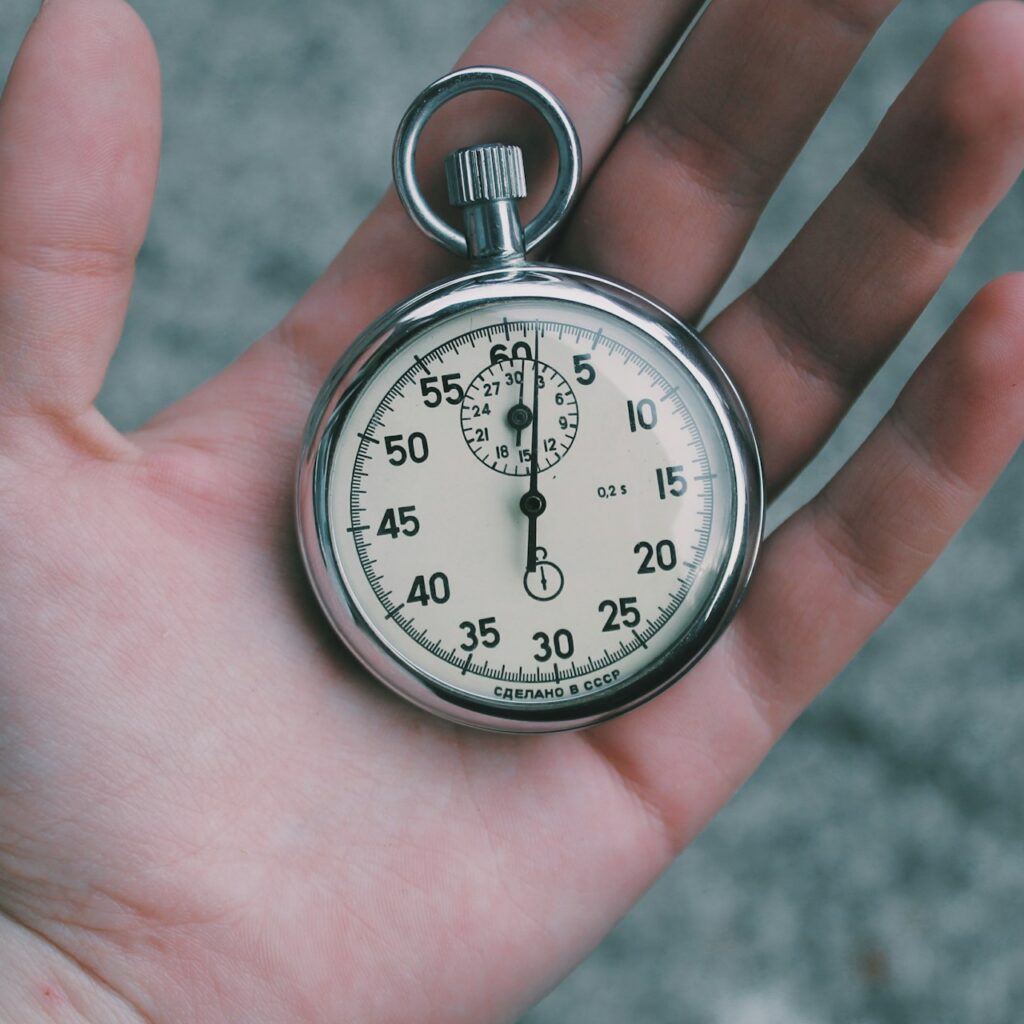
Have you ever wondered why military time exists, and why the armed forces trade a.m. and p.m. for numbers like 1400 and 2100? Beyond keeping missions running around the clock, the military has shaped far more of everyday life than most civilians realize. Here’s a look at why military time exists.
Keep reading to learn how to read the 24-hour clock and discover the surprising military roots behind items you probably use every day.
Origin of Military Time and How to Read it
Military time isn’t just a weird habit; it’s a system built to eliminate confusion during round-the-clock operations. Mixing up a.m. and p.m. could result in dire consequences.
Military time divides the day into 24 hours rather than following a 12-hour clock format used by most Americans (Coordinated Universal Time [UTC]). The hours begin at midnight (00:00) and end 24 hours later at 23:59.
Military time is commonly used in industries worldwide that run 24-hour workdays. In these fields, precise timekeeping is crucial. Using military time ensures all employees are on the same page for time-sensitive tasks. According to Military.com, “One of the main advantages of using military time is eliminating ambiguity. Military routines and operations demand precision, and the use of the 24-hour clock system prevents any confusion over a.m. versus p.m.” In high-stakes environments, that kind of precision isn’t just convenient; it’s essential. Which is exactly why military time has stuck around for so long.
To read military time, you need to understand that this format does not use a.m. or p.m. since numbers aren’t reused. Military time begins at midnight or at 00:00 (zero one hundred). If you use UTC, 2:00 a.m. is 02:00 in military time, and so on. The hours and minutes are also expressed without the colon, which is why 02:00 is read as zero two hundred. When it is midday, the hour reads 12:00 and continues until 23:59.
The Military’s Secret Influence on Everyday Life
Beyond the battlefield, military discipline has quietly shaped habits and routines most people use without ever realizing where they came from.
Even something as routine as setting the clocks forward each spring traces back to a wartime decision. According to the United Service Organizations (USO), “Decades later, just after the U.S. entered World War II, Congress once again passed a law in 1942 implementing daylight saving time in order to conserve fuel and ‘promote national security and defense.’” Because of this, it became commonly nicknamed “war time”. The extra hour of daylight meant an extra hour of work, a wartime motivation to get ahead of enemies.
Military-style bed-making, with tight hospital corners tucked at a precise 45-degree angle, wasn’t just about neatness. It was rooted in sanitation and uniform discipline, keeping quarters ready for inspection at any moment.
Basic training instills a habit of uniform organization, with clothes facing the same direction and items arranged in exact rows. This system reflects discipline and rapid readiness right down to precise square folds and tightly rolled T-shirts.
Military Inventions
Many everyday objects most people use have originated in the military. This includes sanitary napkins, T-shirts, duct tape, and even M&Ms.
Kotex sanitary napkins trace their origins back to cellulose material originally created to dress battlefield wounds during World War I. What started as a medical supply eventually became a household product.
Once just a military undergarment, the T-shirt became a civilian staple after soldiers popularized it as everyday wear.
Duct tape was originally developed for the military to keep ammunition cases sealed and protected from moisture. Its durability made it an instant favorite far beyond the battlefield.
M&Ms were created during World War II to give soldiers a chocolate that could withstand heat without melting in their hands. What began as a practical wartime solution became one of the most popular candies in the world.
Conclusion
Now that you know why military time exists and how to read it, you can also see just how far the military’s influence stretches into everyday life. From the clock on your wall to the t-shirt in your drawer, military discipline has shaped habits and objects most people never think twice about.
To learn more, visit Ferry Godmother Productions.