
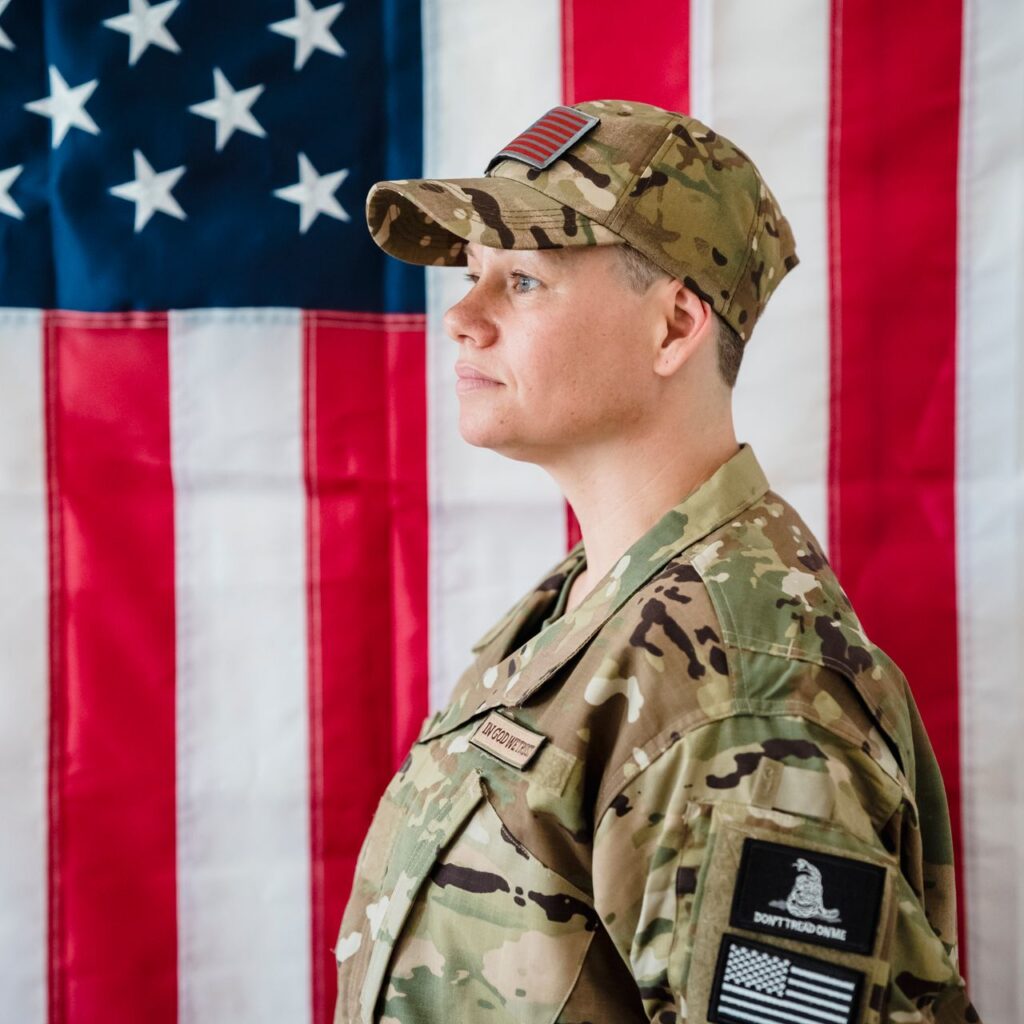
Before women could serve with full rank and recognition, they had to fight just to be recognized at all. Here’s a look at the legacy of the Women’s Army Corps, from its wartime origins to the barriers it broke for today’s service members.
Keep reading to learn how the WAC evolved from an auxiliary unit into a fully integrated force, and why its legacy still shapes military service today.
A Wartime Necessity Becomes a Legacy: WAC Then
Born out of wartime necessity, the Women’s Army Corps started as a solution to a manpower shortage. However, it quickly became something much bigger.
The Women’s Auxiliary Army Corps (WAAC) was formed in May 1942, and converted to Women’s Army Corps (WAC) in July 1943. It was created under the “free a man to fight” philosophy, meaning members of the WAC took over non-combat support roles.
More than 150,000 women served in WWII in over 200 specialties like postal clerks, switchboard operators, parachute riggers, and many more.
After proving their necessity, WAC members faced one final hurdle: making their place in the military permanent. After years of debate over whether women belonged in the armed forces long-term, Congress finally settled the question. According to the National WWII Museum, “The issue was finally decided in May 1948, when the Senate and House of Representatives approved the bill with provisions for women’s enlistment in both the Regular and Reserve Armed Forces.” This turning point for the WAC became known as the Women’s Armed Services Integration Act of 1948.
Serving Without Limits: WAC Now
Decades after WAC’s formation, the barriers that once limited women’s roles in the military have all but disappeared.
Integration gave women the chance to pursue longer military careers and rise to higher ranks. In 1978, the WAC officially disbanded. Women were folded directly into the regular armed forces rather than keeping them in a separate unit.
In 2013, the lifting of the combat exclusion policy officially opened every military occupation to qualified female service members. It marked the final major barrier after decades of slow progress.
Today, women serve with full rank, active-duty status, and equal benefits. According to Melissa M. Lee, a professor of political science at the University of Pennsylvania, “Today, nearly 400,000 women serve in active-duty and reserve roles in the U.S. military, making up over 17% and 21% of the forces, respectively.” What began as a wartime necessity has grown into a permanent, integral part of the armed forces.
Legacy of the Women’s Army Corps
While the WAC wasn’t the first time women answered the call to serve, it was the moment their service finally became official.
Women answering the call to serve wasn’t new. 20,000 women assisted the Continental Army during the American Revolution. According to the National Archives Foundation, “…thousands served in the Signal Corps as switchboard operators (called “Hello Girls”) during World War I. However, the WAC represents the first step to formally integrating women into military service.” What made the WAC different wasn’t that women served; it was that their service finally counted.
WAC established the formal inclusion of women in the Army, paving the way for permanent, expanded career paths. It also broadened the range of occupational roles for women in uniform. Moving women far beyond the limited support positions they were first assigned.
Despite facing smear campaigns and institutional resistance, WAC members broke through both racial and gender barriers. That resilience is exactly why their legacy still shapes military service today.
Conclusion
Now that you’ve seen how the WAC evolved from a wartime necessity into a fully integrated force, you can see just how far its legacy still reaches today. From the barriers it broke to the careers it made possible, the Women’s Army Corps changed what military service could look like for generations of women.
To learn more, visit Ferry Godmother Productions.