
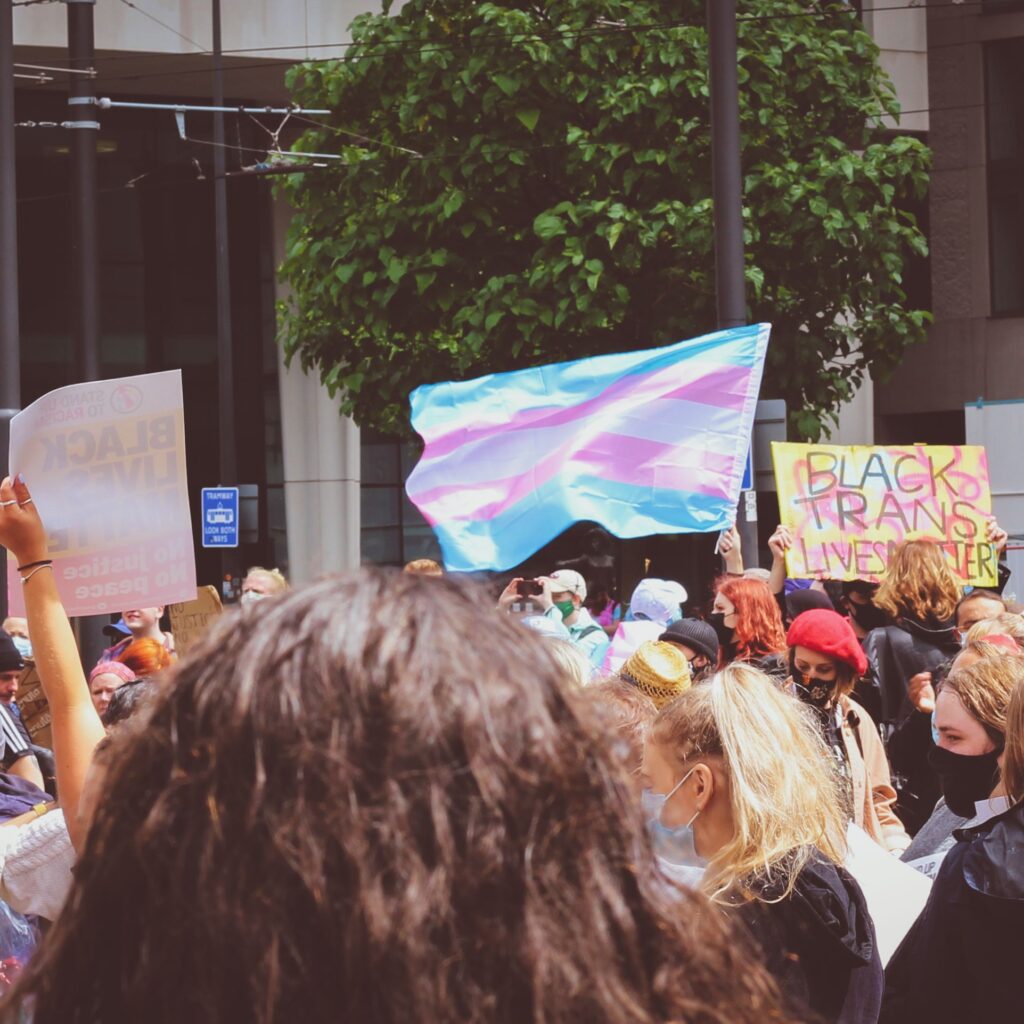
Transgender history isn’t a modern phenomenon; it’s far older and richer than most people expect. Here are 10 things most people don’t know about transgender history, spanning ancient culture, medical milestones, and moments of resistance.
Keep reading to learn more about the roots, science, and courage that shaped this history.
Ancient and Cultural Roots
Long before modern terminology existed, cultures around the world recognized and revered people who lived outside the gender binary.
The earliest known examples of gender variance in recorded history come from ancient Mesopotamia. Gala priests served the goddess Inanna as early as the third millennium BCE. According to Morg Daniels, a writer for Academus , “Ancient Mesopotamian Transgender and Non-Binary Identities”, they state, “In fact, individuals living outside of the gender binary were heavily involved and associated with the cult of Inanna, and her cult members and priests were known for their androgyny and blurring or destroying the gender binary”. It was also said that it was the power of Inanna to change the gender of her believers. Some believe this to be early evidence of gender transition, showing that living outside the gender norm is far from a modern phenomenon.
Recognition of gender variance spans nearly every culture and continent. In pre-modern Islamic societies, the mukhannathun occupied a recognized gender role as early as the 7th century CE. In South Asia, hijras have existed for thousands of years as a third gender community.
Medical and Scientific Milestones
As medical understanding evolved, so did the recognition that transgender identity is a legitimate and long-documented part of human experience.
The term “Two-Spirit” was coined by indigenous activist Albert McLeod and Cree Elder Myra Laramee. The purpose of the term was to replace a derogatory term used to refer to Native Americans who fulfill a traditional third-gender role in their society.
Chevalier d’Éon (1728–1810) was a French soldier, diplomat, and spy who spent the first half of her life publicly presenting as a man. In the mid-1750s, she infiltrated the court of Empress Elizabeth of Russia by disguising herself as a woman. She went on to fight in the Seven Years’ War and played a role in drafting the treaty that ended it. Then, in 1777, d’Éon began living permanently as a woman, a change formally recognized by King Louis XVI. D’Éon is one of the earliest documented examples of a legally recognized gender transition in European history.
Robert Allen Bamford Jr., also known as Alan L. Hart (1890-1962), was the first documented Transgender person to have gender-affirming surgery. According to the National Library of Medicine, it states, “His groundbreaking medical contributions were made despite facing systemic discrimination as one of the first transgender men in the United States to undergo gender-affirming surgery”. He was a pioneer in both medical and LGBTQ+ history. As a courageous person who persevered despite the social discrimination that threatened his career. And as the person who spearheaded the use of chest radiology as a screening tool for tuberculosis.
The first modern gender clinic was created in Berlin in 1919. It was known as the Institut für Sexualwissenschaft, a private sexology research institute. It was headed by Magnus Hirschfeld, who also ran the world’s first organization for homosexuals, the
Modern Resistance and Visibility
As the 20th century progressed, transgender individuals fought not just to be seen, but to be treated with dignity and respect.
There are many instances of transgender Civil War soldiers, one well-known figure being Albert Cashier. He fought in over 40 battles and received high praise from his comrades in arms. His fellow veterans advocated for Cashier to receive full military honors as a man when he passed away.
The Compton’s Cafeteria Riot and the Cooper Donuts Riot are both examples of modern resistance against discrimination of transgender people. Cooper Donuts Riot occurred in 1959 in Los Angeles, an uprising in reaction to police harassment of LGBTQ people. Compton’s Cafeteria Riot occurred in 1966 in San Francisco, a response to violent police action against drag queens and trans women. Both riots are among the first examples of transgender activism.
The Stonewall Uprising is one of the most well-known examples of transgender activism. It started on June 28th, 1969, when police raided Stonewall Inn, a gay bar. They interrogated the patrons and ordered the arrest of the employees and cross-dressing folk. According to the Library of Congress, “The Stonewall Uprising of 1969” states, “Word of the Stonewall raid spread quickly throughout the city. By that evening (Saturday, June 28), thousands of protesters had gathered at the Stonewall and in the surrounding area”. The uprising marked a turning point, transforming years of quiet resistance into a visible, unified fight for recognition.
The history behind the modern transgender symbol dates back to the 1990s when it was designed to represent individuals who transcended traditional gender categories. The symbol utilizes the astrological signs for Mars and Venus.
Conclusion
Now that you’ve learned about the ancient roots, medical milestones, and moments of resistance that shaped transgender history, you can see just how far back this history truly goes. From revered figures in ancient Mesopotamia to modern-day activism at Stonewall, transgender people have always been part of the human story, even when history tried to erase them.
To learn more, visit Ferry Godmother Productions.