
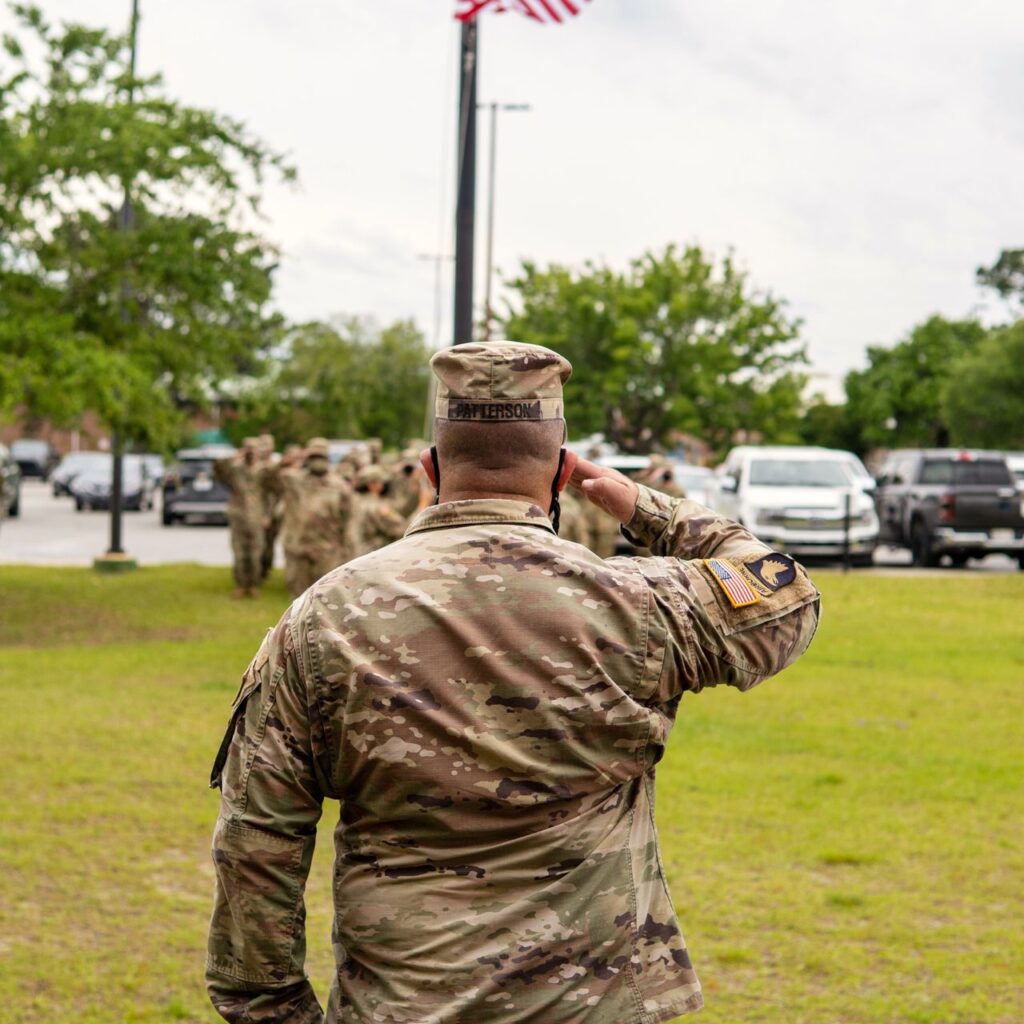
Have you ever been curious about popular military traditions that are unheard of by most civilians? Many military traditions build camaraderie, discipline, and morale among service members. Here are 10 military traditions veterans know that have been passed down through generations. Keep reading to learn more about military academy, active-duty, and military funeral traditions.
Military Academy Traditions
At popular military academies like West Point and the Naval Academy, a couple of traditions veterans know are the SOSH run, the Herndon Monument climb, and the hundred nights.
The SOSH run, an abbreviated term for social science, takes place at the U.S. Military Academy at West Point, where third-year cadets find creative and comedic ways to turn their final SOSH papers in front of cheering crowds before a strict deadline. You won’t find a more eccentric group than cadets in silly costumes, dreaming up playful ways to cross the central area to the department office.
The Herndon Monument climb marks the end of your first (plebe) year at the U.S. Naval Academy (USNA). Alongside your fellow first-years, you build a human pyramid to scale the vegetable shortening-covered Herndon Monument, which stands 21 feet tall. The objective is to remove a “dixie-cup” hat from the very top and replace it with an upperclassman’s cover. According to the USNA’s public affairs office, this task demonstrates “the teamwork and perseverance they have learned during their first year at the academy.”
The hundred nights is a U.S. Naval Academy tradition celebrated 100 nights before seniors graduate. On this night, you swap roles with the opposite class; if you’re a freshman, you take on the positions and privileges of a senior, while seniors get to relive the nostalgia of their earliest days at the academy.
Traditions of Active-Duty Service Members
From boot camp to deployment, active-duty members experience the military traditions veterans know and remember fondly.
The silver dollar salute is a tradition in which, as a newly commissioned officer, you present a silver coin as a token of appreciation to an enlisted member who provided valuable mentorship. During your first salute, you return the enlisted member’s salute. You then shake their hand, and that’s when you secretly hand off the coin.
Another popular tradition is the grog bowl. The equivalent of a party’s punch bowl, but one you definitely wouldn’t want to drink. The bowl is usually mixed at military balls and includes a variety of alcoholic beverages and other substances such as sand, coffee, and hot sauce. According to the Military Wives Network, the grog bowl is used as a punishment for infractions such as “Arriving late to the cocktail lounge, improper toasting procedure, using foul language,” and much more.
Mustache March is a tradition coined in tribute to legendary fighter pilot Robin Olds. If you’re in the U.S. Air Force, you might grow a mustache at the start of March as a nod to Olds’ extravagant handlebar mustache. The mustache broke facial hair regulations as an act of defiance against dogmatic leadership.
Lastly, as an officer, you’ll often carry a coin with a story or design that means something to you. When you meet up with fellow officers at a bar, you might find yourselves in a challenge coin duel. If you don’t have your coin on you, you’re buying the drinks, and if everyone does, whoever’s holding the least “valuable” coin picks up the tab.
Time-Honored Military Funeral Traditions
Few military traditions veterans know carry as much weight as those observed at a military funeral. Several quiet and deliberate customs are used to honor a lifetime of service and sacrifice.
Leaving a coin for a fallen soldier had become a tradition long before it earned widespread recognition. It gained traction across the United States during the Vietnam War as a quiet form of remembrance. According to a Military Memorial Guide, “Leaving a coin became a practical, wordless way to say, ‘I was here, and I remember’,” during a time of political strife. With each coin value holding a special meaning, communicating the relationship between the visitor and the deceased.
The United States flag is used to cover the casket of the soldier. When the flag is draped, the blue field is at the head and over the left shoulder. The flag cannot touch the ground and does not enter the grave. At the end of the funeral, it is instead removed and folded in a triangular form by the honor guard before being presented to the spouse or next of kin.
Finally, there’s ‘Taps’, the 24-note bugle call played at U.S. military funerals. Its name comes from the way it is tapped on a drum. Composed in 1862 and officially adopted by the U.S. Army in 1874, it has since become the final farewell, a solemn note of rest for those who served.
Conclusion
Now that you’ve explored the military traditions veterans know, from academy rites of passage to active-duty customs to the solemn rituals of a military funeral, you have a deeper appreciation for the history and heart behind military life. These traditions connect generations of service members through morale-building experiences.
To learn more, visit Ferry Godmother Productions.