
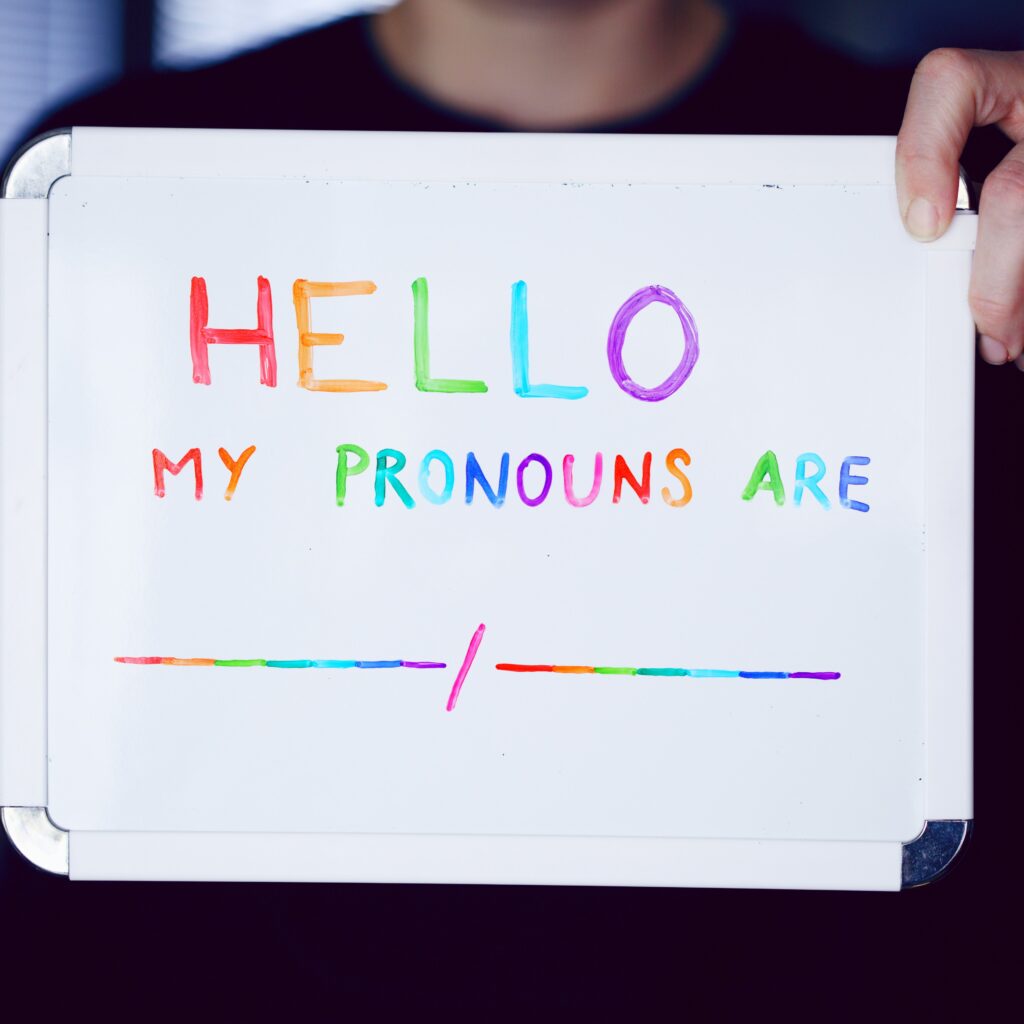
Pronouns are more than just words—they express identity and help people feel recognized and respected. Using the right pronouns shows care, inclusion, and understanding. Learning about pronouns helps create communities where everyone feels seen.
What Are Pronouns?
Pronouns are words we use to refer to someone without using their name. Common examples include she/her, he/him, and they/them. Some people use neopronouns, such as xe/xem or ze/zir, to express identities that do not fit traditional gender categories. Using correct pronouns affirms someone’s sense of self and promotes respect in daily communication (source).
Why Pronouns Matter
For many, pronouns are directly connected to their gender identity. When people use correct pronouns, it helps build trust and emotional safety. Misusing or ignoring pronouns can cause harm by making someone feel unseen or invalidated. According to the Human Rights Campaign, using chosen pronouns is a simple yet powerful act of affirmation (source). Recognizing pronouns helps promote equality in schools, workplaces, and communities.
How Pronouns Reflect Self-Recognition
Pronouns reflect how people experience and understand their gender. Some individuals may use pronouns that align with their gender identity consistently. Others may use more than one set or change them over time. This flexibility shows that gender is personal and can evolve. Using someone’s pronouns communicates respect for who they are, not who others assume them to be.
Creating Inclusive Spaces Through Language
Inclusive language benefits everyone. Sharing pronouns during introductions or in email signatures can normalize the practice. It signals that your space welcomes people of all gender identities. Asking for pronouns respectfully, rather than assuming, shows genuine interest in understanding others. Resources from organizations like GLAAD offer practical guidance on pronoun use and gender-inclusive language (source).
Conclusion
Pronouns express identity by giving people the language to be seen as themselves. They remind us that inclusion starts with communication. Taking time to learn and use correct pronouns builds empathy, trust, and community. To learn more about inclusive practices and creative expression, visit ferrygodmother.com.