
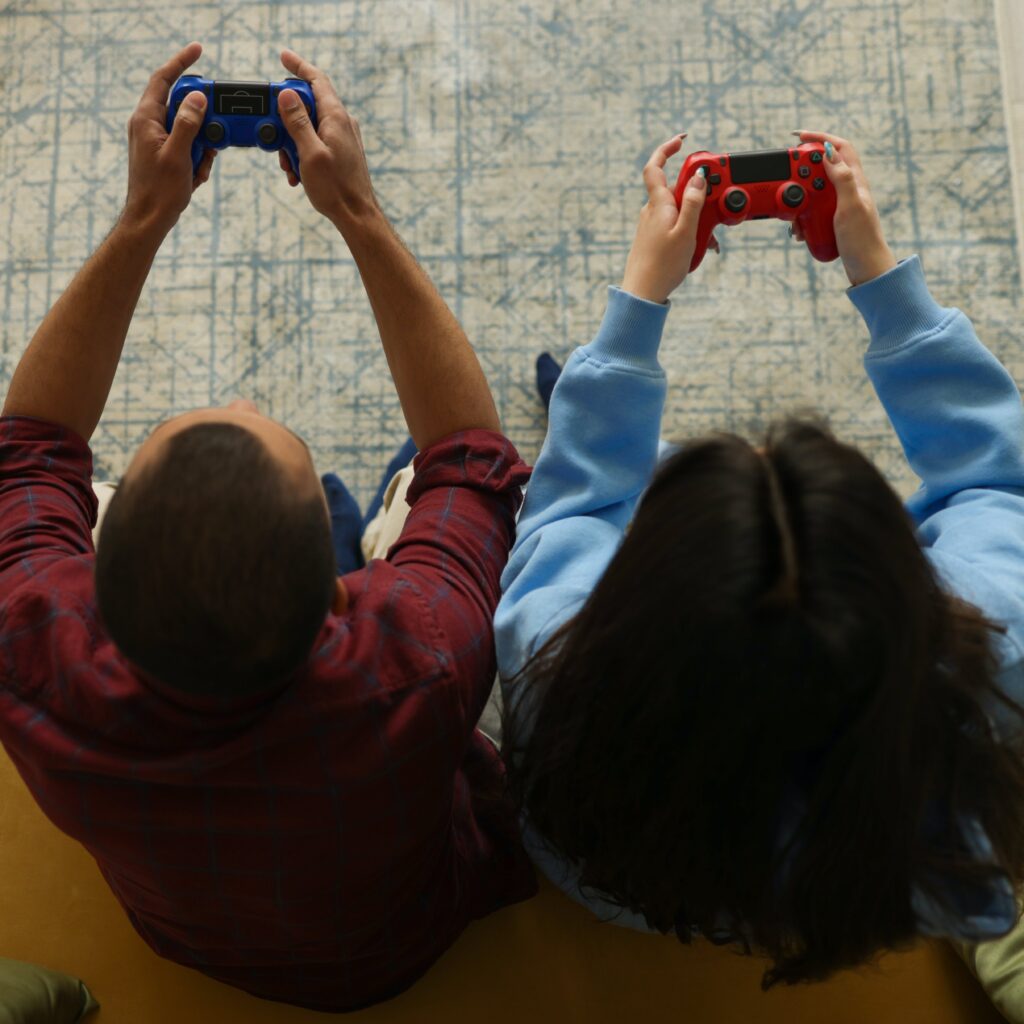
Video games can often be seen as a distraction from work or school, but they can offer many positive benefits. Many believe that it can also help both children and adults. Positive social interaction, critical thinking, and reduced anxiety are some potential benefits of gaming.
Continue reading to learn the benefits of gaming on mental health.
Reducing Anxiety
Gaming can help unwind and reduce anxiety, which GEMH Lab, Gaming for Emotional and Mental Health, helps research. GEMH Lab researches the benefits of gaming partly through their own designed virtual reality video game titled DIVE. Additionally, GEMH recognizes that gaming can be a virtual playground for younger people as it allows them to feel understood and connected.
The GEMH team learned that cognitive behavioral therapy was not ideal for regulating anxiety. However, video games allowed anxiety regulation to seamlessly merge with gaming’s controls, puzzle solutions, and game progression. GEMH developed DIVE, a virtual reality game controlled by breathing, where younger people can learn to control their anxiety. GEMH recognized that gaming can be inviting for younger people and allows them to think critically about solving puzzles and creating solutions.
Gaming & Critical Thinking
Most video game genres are goal-oriented. This type of gameplay stimulates one’s imagination and critical thinking. WebMD expresses that the “complexity of a game prepares one to think, strategize, and quickly analyze” its objectives. A prominent example is Tetris.
Tetris is a game where players have limited time to think of block placements and delete rows of blocks. Every known Tetris game uses seven types of blocks with different shapes, and this type of gameplay urges players to create strategies based on the shapes of the blocks within the limited time given.
Tetris was released in 1984, but it continues to motivate players to be problem solvers and several games borrowed that challenge. Although players often face solo challenges, multiplayer games require players to work together and provide significant, positive social interaction.

Positive Social Interaction
Whether through co-op or multiplayer games, gaming invites players to work together and have fun. For example, couch co-op games like Lego Star Wars provide puzzles and collectibles for players to solve and find with others.
Likewise, multiplayer battle royale games like Apex Legends or Fortnite teach players to work together for a common goal or objective. These games give players communication controls that help identify enemies, weapons, supplies, or landmarks. Ultimately, video games can provide a positive social interaction where players understand a common goal that incentivizes teamwork.
Conclusion
Video games give people reasons to work together, think critically, and help reduce anxiety, which can benefit them positively. Younger people can also develop crucial skills like problem–solving or social interaction through gaming. These environments allow creativity to flourish and reward players for problem–solving and teamwork. Video games are a great way to unwind, but they can also be a useful tool for mental health.
For more about gaming and beyond, visit the rest of FerryGodmother.com.