
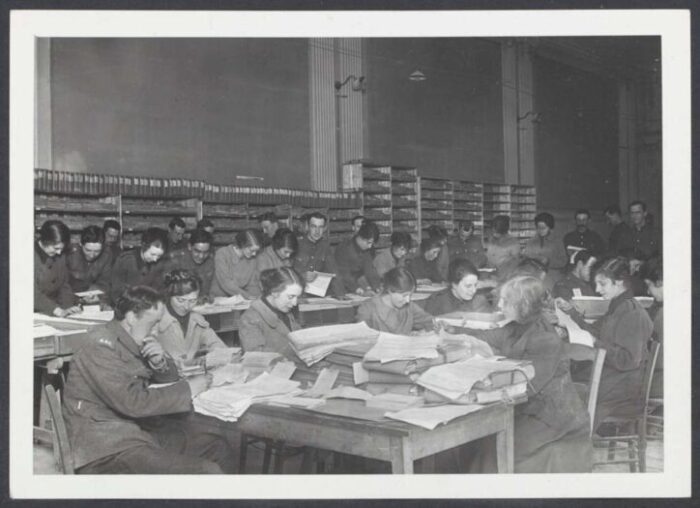
The phrase “secret agents in skirts” may sound like spies behind velvet curtains. In reality, Women’s Army Corps (WAC) members shaped U.S. military intelligence during and after World War II. These women decoded messages, intercepted transmissions, and worked in high-stakes operations. Their contributions were vital, yet history often overlooked them.
A New Role for Women: WACs Enter Intelligence Work
The Women’s Army Corps (first WAAC, later WAC) was formed in 1942 to place women in noncombat roles (National WWII Museum). Soon, leaders realized women could strengthen intelligence. Some brought skills in languages, math, or cryptography. Others learned quickly and mastered analysis.
The Army Signal Intelligence Service recruited WACs to handle codebreaking, intercepts, and decryption (NSA). At Arlington Hall Station in Virginia, women cryptologists—often called “Code Girls”—worked under strict secrecy to break enemy codes (National Park Service). Some WACs also operated SIGABA machines to process enemy messages (National Geographic Kids).
Verified Contributions and Individual Figures
More than 10,000 women supported wartime intelligence behind the scenes during WWII (Smithsonian Magazine). Not all were WACs, but many served directly within cryptologic operations.
One documented WAC cryptologist trained at Vint Hill Farms and later deployed to the Southwest Pacific to work on Japanese decryption (NSA).
Another figure, Barbara Lauwers, a WAC corporal, joined the OSS in Rome. She ran psychological warfare and deception campaigns.
After the war, WACs continued to serve in intelligence. During the Cold War, they worked as cryptographers, specialists, and communication operators (Army Heritage). Doris “Lucki” Ilda Allen, another WAC, became a military intelligence officer during Vietnam and later entered the Military Intelligence Hall of Fame.
In 1944, a WAC detachment joined the Manhattan Project. By the war’s end, 422 women had handled classified communications and records tied to atomic research.
Legacy, Gaps, and Recognition
Despite these achievements, recognition was rare. Many WACs swore secrecy oaths that silenced them for decades (Smithsonian Air and Space). Promotions often stalled, and official credit lagged (Army Heritage).
Today, their legacy is preserved in archives and museums. Cryptologists such as Genevieve Grotjan, Feinstein, and Ann Caracristi are now honored for work once hidden (National Park Service).
WAC intelligence proved that knowledge could shift battles as much as firepower. Their service laid the foundation for women in modern military intelligence.
Conclusion and Call to Share
WACs did not always carry rifles, but they carried knowledge. They decrypted, tracked, and supported a strategy that shaped history.
If you or a relative served in WAC intelligence, we’d love to hear your story. Please reach out to The Ferry Godmother and help us bring these hidden histories to light.